Why ‘Gear Doesn’t Matter’ Is the Biggest Lie in Street Photography

The ‘gear doesn’t matter’ mantra has been uttered and abused in the street photography world for far too long. The simple truth is that gear does matter. The proof lies in the gear bags of the street photographers that parrot the phrase.
When Photographers Say ‘Gear Doesn’t Matter’ but Pack $7K Leica Kits
YouTubers have pushed the “gear doesn’t matter” narrative harder than anyone. It may have been written about more, but the influence of YouTube photographers carries more weight for people searching online for direction. One thing I have noticed consistently is this: the loudest voices downplaying the importance of gear almost always own top-tier setups. I don’t recall a single exception among the ones I’ve followed or watched. Not every street shooter on YouTube buys into this mindset, but enough do to keep the myth alive.
I want to make this article about why gear matters to me in my street photography. I’m not trying to speak for everyone. Different photographers have different needs, and that is completely valid. What I do want to highlight is something specific to this genre. Street photography seems to be the only area where so many gatekeepers and influencers actively downplay the importance of the very tools that make the work possible. It is a strange contradiction that does not show up in most other types of photography.
In nearly every other type of photography, the gear is recognized as essential. It’s a given.
You can’t shoot astrophotography with a Polaroid. You need long exposures, fast lenses, tracking mounts, and a sensor that can handle noise.
You can’t expect to do proper portraiture without the right lens—typically 50mm or longer, often fast glass like an 85mm f/1.4.
Wildlife photography demands long lenses, usually 300mm and up, with fast autofocus and stabilization just to track the subject.
For macro photography, you need a macro lens with true close focusing ability, often with rails or ring lights for precision.
Sports photography requires blazing-fast autofocus, high frame rates, and long lenses to keep up with movement and distance.
Product photography needs lighting control, color accuracy, and lenses that render detail and minimize distortion.
Architectural photography often depends on tilt-shift lenses and full-frame sensors to correct for perspective and retain image quality.
Even underwater photography relies heavily on waterproof housings, strobes, and lenses that can focus properly through a flat port.
In each of these fields, the gear isn’t just a bonus; it’s the baseline. You wouldn’t tell a macro shooter that their lens doesn’t matter. You wouldn’t tell a sports photographer to use manual focus. So why is it only in street photography that we’re told to shut up and shoot with whatever is lying around?
I don’t buy it. Gear matters when the craft matters. And for me, in street photography, it absolutely does.
What I don’t have time for is the double standard. Artists in every other field embrace the tools that help them create. No one questions a musician’s reliance on their instrument. Think of Jimi Hendrix and his Stratocaster. Think of Jimmy Page and his Les Paul. Or one of the virtuoso violinists out there rocking a Stradivarius. The list goes on. In music, the gear is part of the voice. But somehow, in street photography, we are expected to pretend that tools don’t matter. I call complete and utter bullshit!
Here are a few of the important features that matter to me.
Silent Shooting Helps Me Stay Invisible
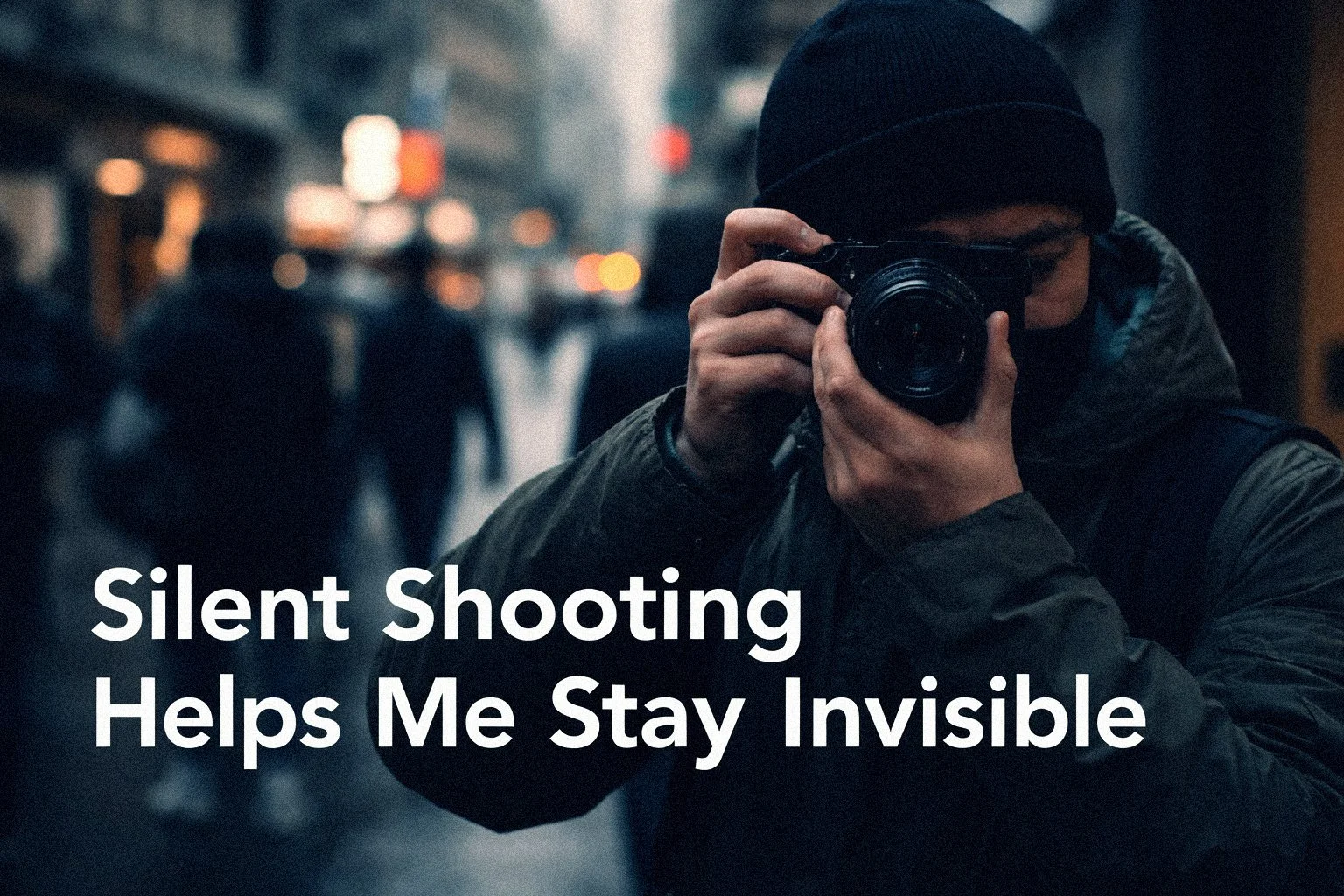
With few exceptions, I use silent shooting for almost everything I do. Street photography depends on remaining unnoticed. The moment people hear a shutter, the atmosphere changes. Faces shift. Body language stiffens. The candid moment vanishes. One audible click can kill the shot before it even happens.
My work relies on staying invisible. I’m not out there to perform or draw attention. I want to capture people as they are, moving through the world without reacting to the camera. A loud shutter turns the camera into a disruption. It interrupts the moment and pulls attention away from the subject.
That’s why silent shooting is essential. I won’t buy any camera that lacks this feature, if it’s even possible to lack such a common option in modern cameras. I don’t care how advanced the rest of the specs are. If the shutter makes noise, it is not a tool I can use. It slows me down, breaks concentration, and takes me out of the zone.
This has nothing to do with being sneaky. It’s about respecting the flow of the street and letting life happen without interference. When the camera is silent, I stop being a presence. I become part of the background. And that’s where this street photographer wants to be, the spider on the wall.
Fast Prime Lenses Give Me the Look and Speed I Want
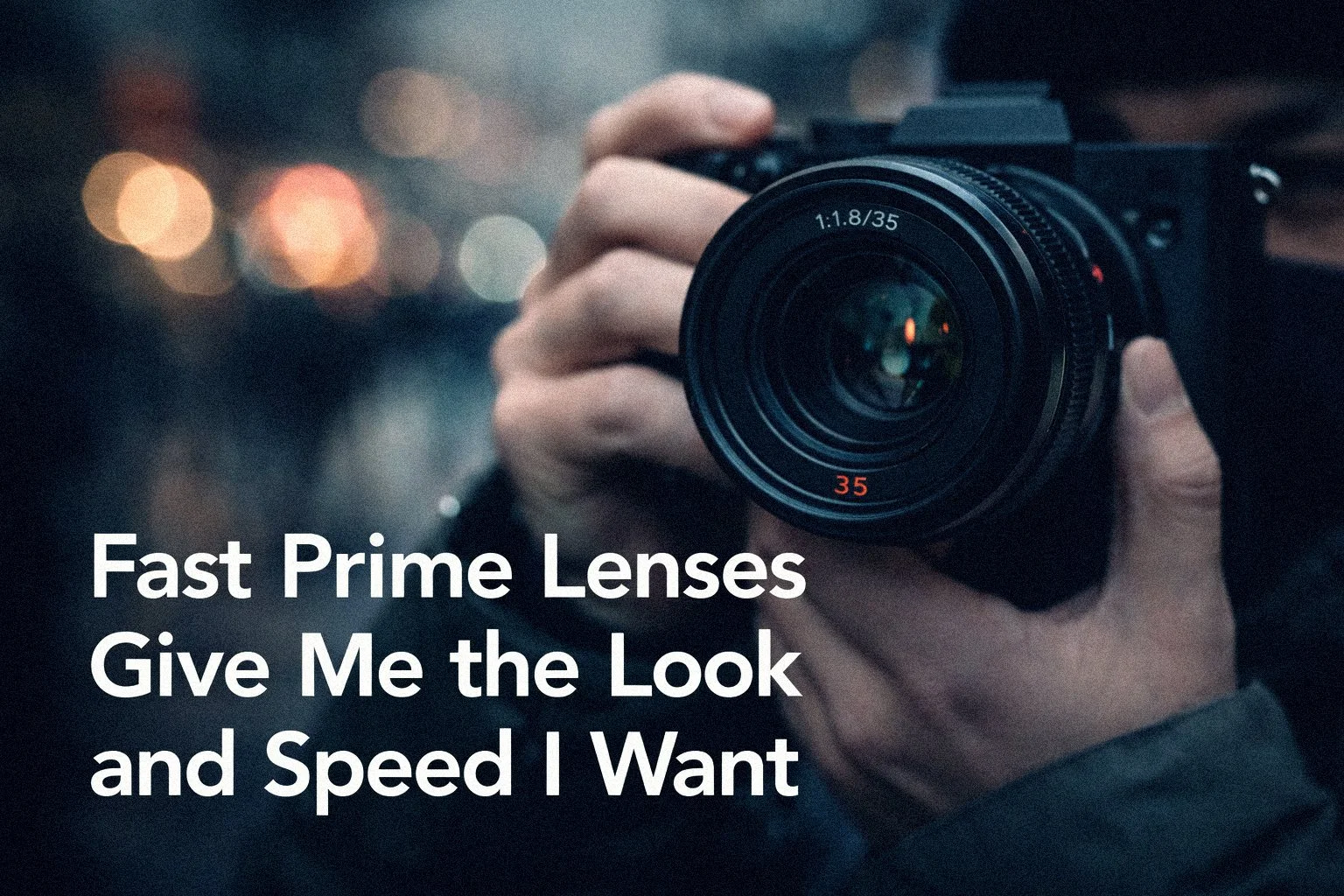
For better or worse, I bought into the idea of using prime lenses early in my street photography journey. I started out with kit lenses, like most people do, but I quickly found myself gravitating toward primes. Even though it meant dealing with the hassle of carrying extra lenses, the trade-off was worth it. Over time, I learned how to avoid overpacking for street sessions. Now, unless I’m shooting on my iPhone, I stick to one focal length when I’m out with my other cameras. That simplicity helps me stay focused and decisive while shooting.
Why prime lenses?
Because they bring clarity. One focal length means I stop second-guessing my framing and start trusting my instincts. I know exactly what the scene will look like before I raise the camera. That familiarity speeds up everything. It sharpens my timing, my composition, and my ability to react without hesitation.
Prime lenses are also faster. Wider apertures give me cleaner images in low light and more control over depth of field. I can separate subjects from background clutter or shoot in dim alleyways without pushing ISO too far. And they are sharper. The optical quality from a solid prime will beat most zoom lenses in the same price range every time.
There’s also the physical side. Most primes are smaller and lighter. They do not draw attention, and they don’t weigh me down after hours on the street. They match the way I work. Simple, focused, and responsive. That is why I keep using them.
Gear matters.
Compact Gear That Lets Me Blend In Without Losing Quality
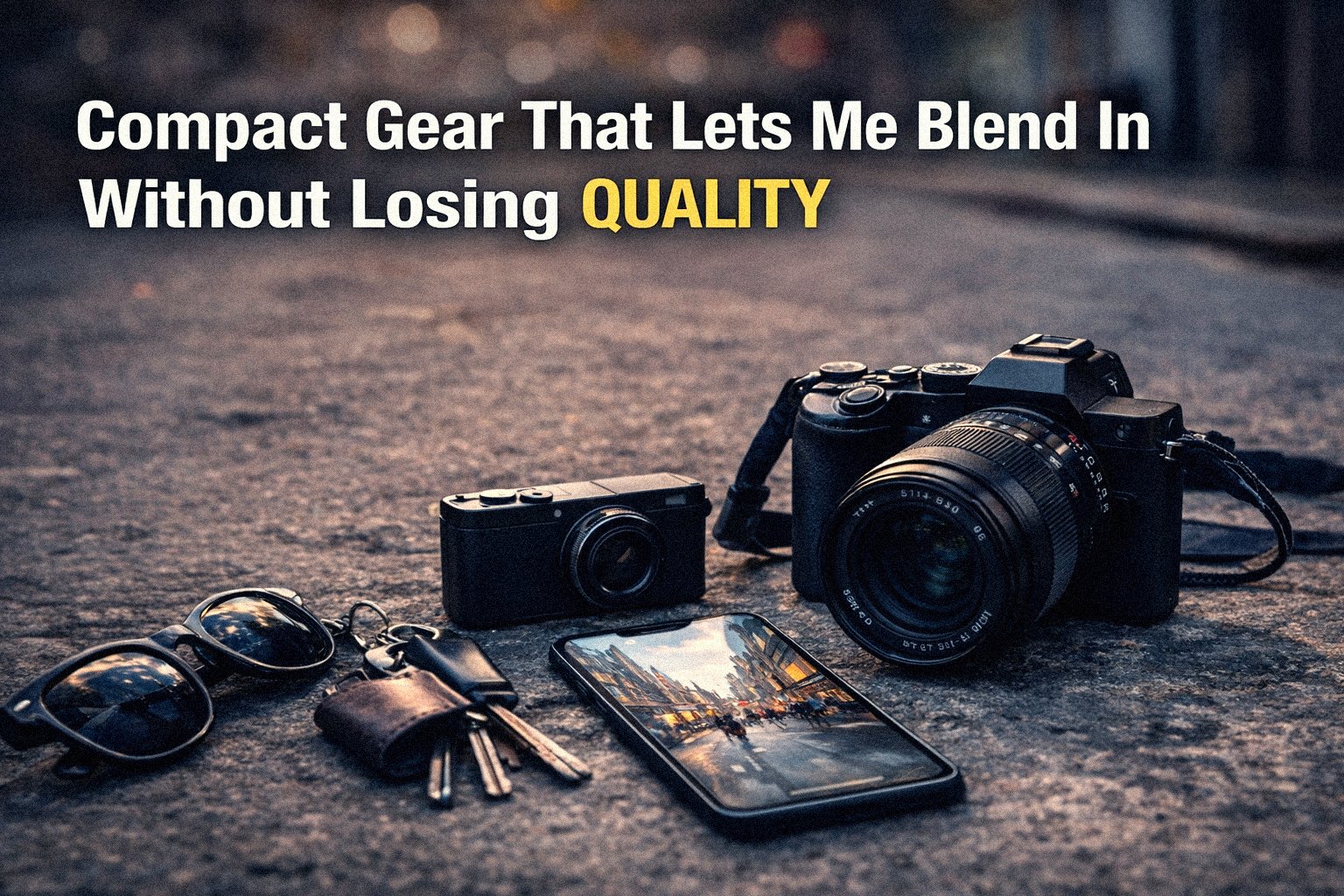
I once had a back-and-forth with a street photographer who told me that image quality does not matter in street photography. On some level, I understood what he was trying to say. Maybe he meant that technical perfection is not everything, or that sharpness alone does not make a photo meaningful. But I took the statement at face value, and I completely disagree.
If I’m using a camera that produces low-quality images, I want nothing to do with it. I have used entry-level APS-C cameras before. One of the Canon Rebel models comes to mind. Even that camera, when paired with a good prime lens, gave me results I could use professionally. I have compared images from that setup to shots from my full frame Sony mirrorless system. After post-processing, it would be hard for most people to tell the difference.
For me, image quality absolutely matters. What I do with the file afterward is my decision. If I want blur, softness, or motion like in my ICM work, then I want to be the one who chooses that look. I don’t want poor results forced on me by a sensor that cannot handle basic situations. Quality gives me options. If I want to add texture or simulate a film look, I want the freedom to do that in post.
I once owned a so-called “rugged” compact camera that was meant for action and underwater use. The image quality was terrible. I got rid of it quickly. I didn’t see the point in carrying gear that works against the image from the start. For me, it’s simple. A strong image begins with a strong file. Everything else comes after that.
Autofocus Needs to React Faster Than I Can Think
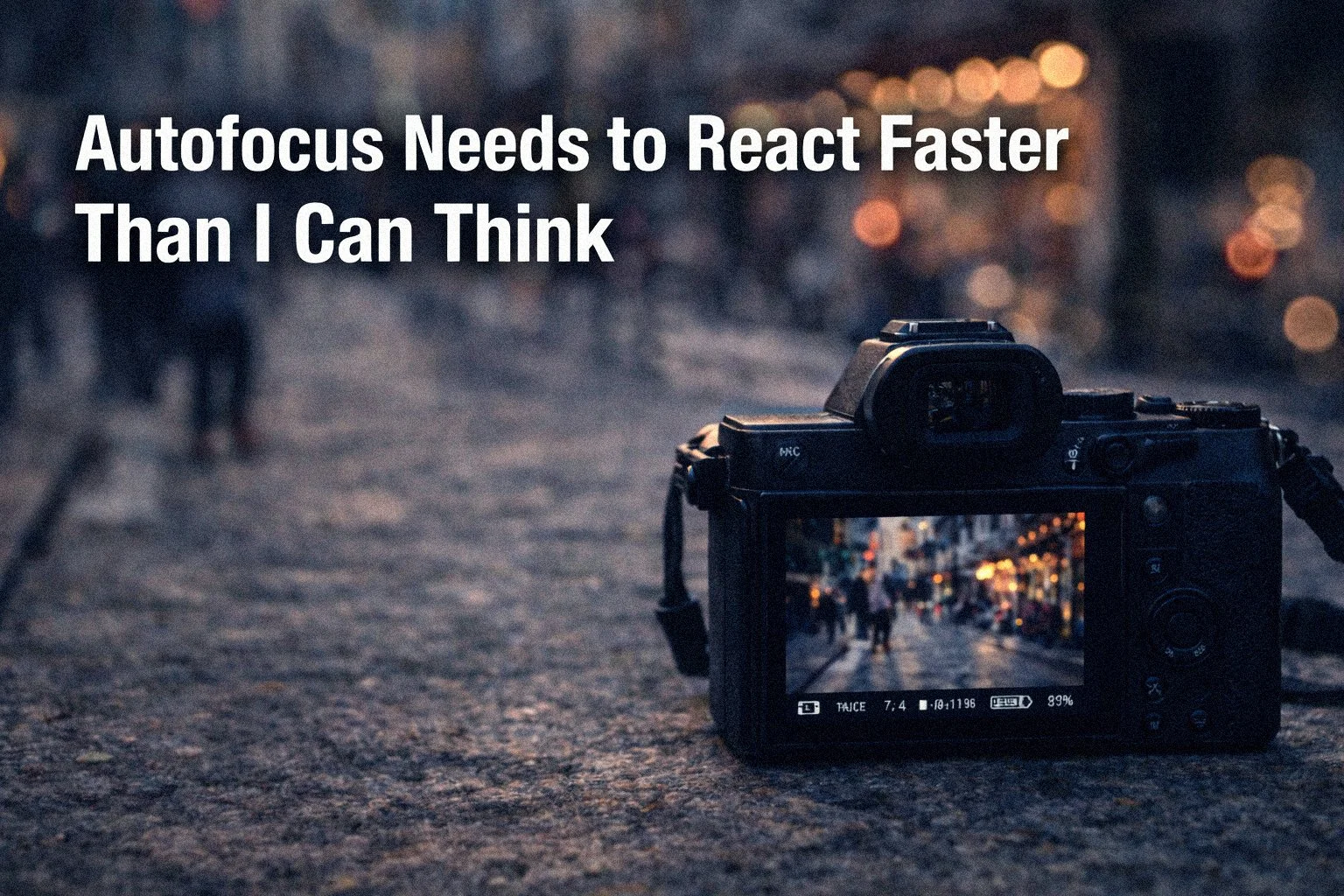
Autofocus isn’t a necessity for everyone. Some street photographers swear by manual focus or zone focus techniques. That’s fine for them. But for me, manual focus slows things down unless I’m using it on purpose to control depth or focus on a specific background element. I’m not usually shooting posed portraits where there is time to adjust settings. I’m working in fast, unpredictable situations. When something unfolds in front of me, I need the camera to respond immediately.
That’s where autofocus matters. Most of the cameras I use have reliable autofocus systems that do their job without getting in the way. Even my iPhone, which can be tricky to use because of how it handles, usually nails focus with minimal effort. The more intuitive the autofocus, the more I can focus on composition, timing, and reading the scene.
This isn’t just about subject matter. It’s about how I shoot. I want gear that reacts faster than I do. I want to see something, raise the camera, and take the shot without delay. If I have to think too long or adjust too much, the moment is gone. Autofocus keeps me in rhythm. It keeps the camera out of my way and lets me stay locked into the street.
Flip Screens Make High and Low Angles Effortless
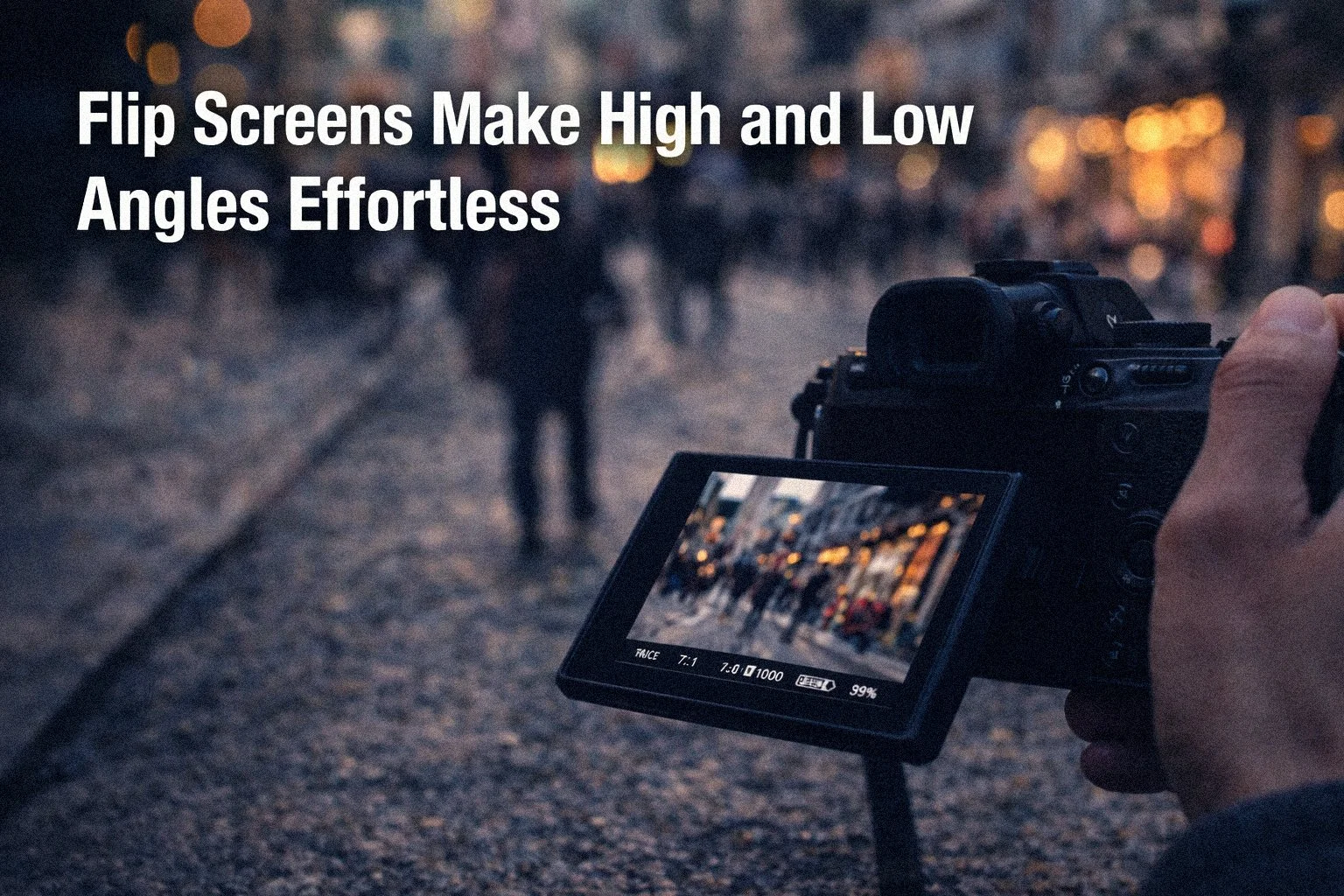
This one might seem minor, but over time, I’ve developed a strong preference for simple flip-up or flip-out screens that aren’t fully articulating. I have used fully articulating screens before, like on the Sony ZV-1, and while they have their place, I found them to be more trouble than they’re worth for the way I shoot. Having to pull the screen out, rotate it, and then fold it back in again slows me down. It feels clunky when what I need is quick access to high and low-angle compositions without added friction.
For street photography, those seconds matter. When I’m shooting from the hip or trying to frame from a low angle without drawing attention, I want a screen that just tilts quickly and gets out of the way. Fully articulating screens were designed more for vloggers, filmmakers, or people who need to see themselves while recording. That’s not how I work. I’m not filming behind-the-scenes content or checking my face on screen. I’m moving through crowds, shooting instinctively, and responding to what unfolds around me. The more moving parts I have to deal with, the more I risk missing a shot.
Usability and speed are priorities in all of my gear choices. If a feature slows me down or serves no purpose in my process, it becomes a distraction. A good flip screen is one of those underrated tools that keeps me in the flow. It lets me shoot from awkward angles without drawing attention or fumbling with my setup. In street photography, that kind of efficiency adds up. Anything that gets in the way of that is not worth keeping around.
Gear matters.
Final Thoughts on Why Gear Still Matters
Naturally, I haven’t listed every feature I look for in a street photography kit. But these are the core elements I rely on when I hit the street. They’re not just preferences. They’re tools that help me work the way I want to work. If you’ve ever heard the phrase "gear doesn’t matter" and something about it felt off, trust your gut. It doesn’t have to feel right because it probably isn’t. Repeating catchphrases, even when they are meant to be encouraging for beginners, is not the best way to have a real conversation about photography. Especially, not street photography.
You know what is helpful? Learning everything about the camera you already own. Getting to know it inside and out. Shooting with the kind of confidence that makes it feel like an extension of your hand. That’s where skill grows. Don’t shy away from your current gear just because it’s not your dream setup. Use it. Push it. Master it. You don’t need the most expensive kit to get started, but you do need the right mindset. That matters more than anything you can buy.
Because one day, you will get your hands on new gear. Maybe something you saved a long time for. Maybe something you spent serious money on. And when that day comes, if you have not developed the mindset to push yourself, explore, and take risks, then the gear won’t change anything. You’ll still be waiting for the "right" setup instead of shooting. A real photographer makes the most of what they have until the time is right to level up. Gear matters. But the work matters more. Maybe that’s a better catchphrase to embrace.