Street Photography as Process: What Urban Plein Air Painters Reveal
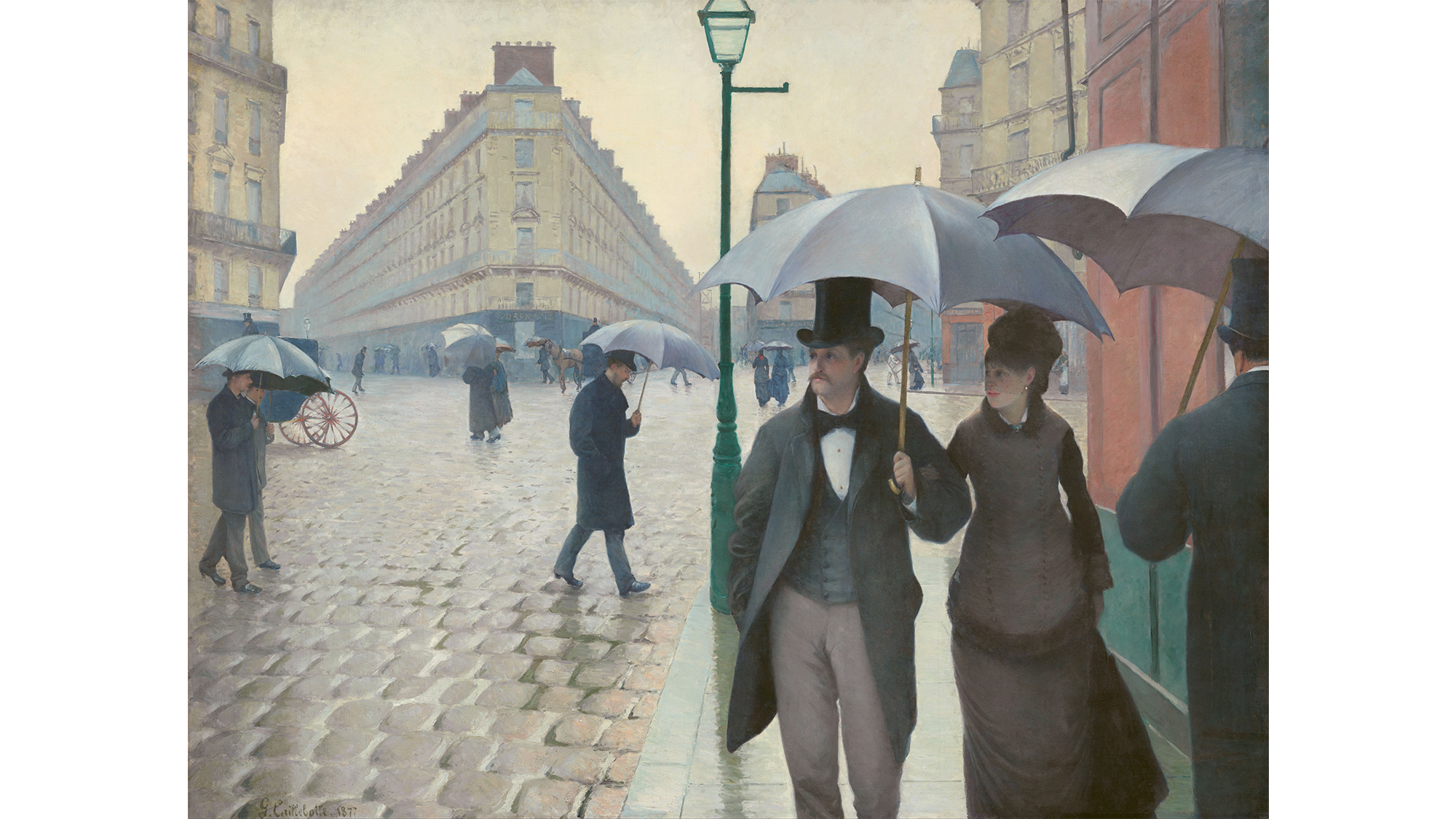
Gustave Caillebotte painting, "Paris Street; Rainy Day (1877)"
Street Photography Is a Process, Not an Aesthetic
I've noticed something troubling in the street photography community: we're stuck. Scroll through any street photography group, exhibition, or magazine, and you'll see the same aesthetic repeated endlessly. High-contrast black-and-white images with the same look, the same feel, the same predictable visual language. We've convinced ourselves this is what street photography is, and we've labeled it "fine art" as if that settles the matter.
But the moment someone experiments with a different technique, the response is swift and dismissive. Intentional camera movement, color palettes that break from the norm, approaches that don't fit the established template? "That's not street photography. That's something else." As if street photography were a rigid box with walls we're not allowed to cross.
I'm here to challenge that perspective. Street photography isn't an aesthetic. It's not a look. It's a process, and the proof is in the history of painting.
Long before street photographers walked the boulevards with cameras, urban plein air painters were doing the exact same thing. Gustave Caillebotte, Édouard Manet, Camille Pissarro, John Sloan, George Bellows. These artists belonged to different movements with vastly different styles. Impressionism, Realism, the Ashcan School. Their paintings looked nothing alike. Yet they shared something fundamental: a process of direct observation, of being present in urban environments, of capturing candid everyday life as it unfolded before them.
They were street photographers, just with paint instead of cameras.
This matters because it reveals what street photography actually is. It's not about black-and-white versus color, sharp versus blurred, gritty versus clean. It's about how you work: walking the streets, observing without staging, responding to the moment, finding meaning in the mundane. The aesthetic can vary wildly, just as it did for these painters, but the process remains constant.
If we understand street photography as a process rather than a genre with fixed aesthetic rules, we free ourselves from the repetitive cycle we're trapped in. We stop policing each other's work and start focusing on what actually matters: the act of seeing, the discipline of observation, the courage to capture life as it happens.
The painters understood this instinctively. It's time we did too.
The Urban Observational Process: What Painters Understood First
Before we can understand the connection between plein air painting and street photography, we need to define what the urban observational process actually is. It's not a vague artistic philosophy. It's a specific set of practices that painters were using long before photographers picked up cameras and started arguing about what counts as street photography.
The process has four non-negotiable components.
Work On Location
Direct observation in situ (on location). Not studio work. Not memory. Not staging. You physically go to where life is happening and document it while it's happening. The urban plein air painters set up easels on sidewalks, positioned themselves at café tables, and worked from windows overlooking busy intersections. Caillebotte stood in Parisian streets in the rain. Pissarro rented hotel rooms specifically for their views of the boulevards. Bellows walked miles through New York tenements. They were there, present, watching. This is the foundation. If you're not observing directly in the environment, you're not practicing this process.
Respond to What's Actually Happening
The city doesn't wait. Light changes. Weather shifts. Crowds gather and scatter. Moments flash and disappear. You have to work fast and decisively, capturing what's in front of you before it's gone. Manet called it "instantly paint what you see." Pissarro emphasized not losing "the first impression." This isn't about carefully constructed compositions worked out over days. It's about acute awareness and immediate response. The technical skill to capture something quickly. The judgment to know what matters. This is why the painters' quotes about process sound exactly like street photography advice. They were solving the same problem: how to grab a fleeting moment before the city moves on.
Document Everyday Life, Not Monuments
The subject matter is ordinary people doing ordinary things. Not grand historical events. Not posed portraits. Not tourist attractions. Walking to work. Sitting in cafés. Hanging laundry. Crossing streets. Children playing. Workers resting. The unglamorous, overlooked, mundane reality of urban existence. Pissarro painted streets that people have come to call ugly. Sloan found "beauty in commonplace things and people." This was radical when they did it. Academic painting wanted mythology and nobility. These painters wanted truth. The same impulse drives street photography. The decisive moment isn't usually decisive because something dramatic happened. It's decisive because you saw something real and captured it.
Observe, Don't Participate
The flâneur mindset. This French term describes someone who strolls through the city observing with detached curiosity. You're a witness, not a participant. You watch life unfold without inserting yourself into it. You absorb the rhythms of the street, the textures of the crowd, the patterns of urban behavior. You walk until something catches your eye and demands to be recorded. Sloan watched from windows "so that I am not observed at all." Bellows walked "unfashionable streets" looking for moments to capture. This isn't passive tourism. It's an active, disciplined observation. You're hunting for truth without disturbing it.
These four elements define the urban observational process. Not the medium you use. Not the aesthetic style you adopt. Not whether your final work is Impressionist or Realist, color or black and white, sharp or blurred. The process is about how you engage with the city: being there, responding to what's real, documenting everyday life, observing without interfering.
The painters who mastered this process produced wildly different-looking work. But they all followed the same fundamental approach to seeing and capturing urban life. That's the point. The process unifies them. The aesthetics diverge. Always have, always will.
The Urban Plein Air Painters and Their Process
Let’s see how five painters across different movements and continents all practiced the same urban observational process. Their styles looked nothing alike, but their approach to working was essentially identical. More importantly, their own words about their process reveal they understood exactly what they were doing.
Gustave Caillebotte (French, 1848-1894)
Caillebotte is perhaps the most "photographic" of all the Impressionists. His most famous work, Paris Street; Rainy Day (1877) —the featured image in this article—looks so much like a street photograph that it's almost uncanny. The way figures are cropped at the edges, the shallow depth of field effect, and the candid positioning of pedestrians crossing a wet intersection. It could have been shot yesterday with a 35mm camera.
But what matters more than how it looks is how Caillebotte worked. As one art historian noted, "Probably the most important thing that separates the Impressionists from the artists who came before them is this very strong awareness of the importance of observation. They were very much drawn to and embraced the notion of the painting of modern life, that the artist must be first and foremost aware of the world around him, that he shouldn't paint fantasies. He shouldn't paint historical images; he should paint the world he knows and experiences firsthand."¹
This was Caillebotte's guiding principle. He painted what he saw on the streets of Paris, directly observed. His interest in photography influenced his compositions. One analysis points out that "Caillebotte's interest in photography is evident. The figures in the foreground appear 'out of focus', those in the mid-distance (the carriage and pedestrians at the intersection) have sharp edges, while the features in the background become progressively indistinct. The severe cropping of some figures, particularly the man at the far right, further suggests the influence of photography."²
Even critics of his time recognized something different about his approach. During the third Impressionist exhibition, one reviewer described Caillebotte as "an Impressionist in name only. He knows how to draw and paints more seriously than his friends."³ Émile Zola referred to him as "a young painter of the greatest courage and who does not shrink from life-size modern subjects."⁴ Another critic, Georges Rivière, called him "an intrepid seeker" and noted the difficulty of his large-scale street scenes: "Those who have criticised the picture have not dreamed how difficult it was, and what skill was necessary to bring off a canvas of this size."⁴
Caillebotte understood he was documenting modern Paris through direct observation. He was a flâneur with a paintbrush.
Édouard Manet (French, 1832-1883)
If Caillebotte was methodical and precise, Manet was intuitive and immediate. His approach to the urban observational process was defined by speed and directness. He famously said, "One must be of one's time and paint what one sees."⁵
That simple statement contains the entire philosophy. Be of your time. Paint what you see. Don't retreat into historical subjects or mythological fantasy. Look at the world around you and capture it.
Manet took this further with his thoughts on process: "There is only one true thing: instantly paint what you see. When you've got it, you've got it. When you haven't, you begin again. All the rest is humbug."⁵
This is the decisive moment in painting. The same concept Henri Cartier-Bresson would later articulate for photography. You see it, you capture it, you move on. No overthinking, no elaborate planning. Pure observation and response.
Manet's role as a flâneur of Paris was central to his work. The poet and art critic Charles Baudelaire, who influenced Manet deeply, wrote in his 1864 essay "The Painter of Modern Life" that the artist's duty was to encapsulate the essence of the "fleeting, ephemeral experience of life in an urban metropolis."⁶ Manet took this to heart. One contemporary observer noted that "becoming a flâneur of Parisian life and translating his observations onto his canvases came naturally for Manet."⁷
His café scenes are perfect examples. Works like A Bar at the Folies-Bergère and Music in the Tuileries show people drinking, listening to music, flirting, reading, and waiting. One analysis notes that "many of these paintings were based on sketches executed on the spot. Such depictions represent the painted journal of a flâneur."²
A painted journal of a flâneur. That's street photography.
Camille Pissarro (French, 1830-1903)
Pissarro brought a different sensibility to urban observation. Where Manet focused on cafés and social spaces, Pissarro was obsessed with the streets themselves. Boulevards, intersections, the flow of traffic, and pedestrians. He painted Paris from hotel room windows, capturing the sweep of urban life from above.
What I love about Pissarro is his explicit enthusiasm for what others considered ugly. In a 1897 letter to his son Lucien, he wrote: "I am delighted to be able to paint these Paris streets that people have come to call ugly, but which are so silvery, so luminous and vital."⁸
He doubled down on this in another letter: "Perhaps it is not aesthetic, but I am delighted to be able to paint these Paris streets that people have come to call ugly. This is completely modern!"⁹
This is the street photography mindset. Finding beauty in what others dismiss. Embracing the unglamorous reality of urban life. The "completely modern" aspect was crucial to him.
Pissarro's process advice sounds remarkably like what we tell photographers today: "Work at the same time on sky, water, branches, ground, keeping everything going on an equal basis. Don't be afraid of putting on color. Paint generously and unhesitatingly, for it is best not to lose the first impression."¹⁰
Not to lose the first impression. The immediate response to what you're seeing. This is the essence of working quickly and decisively in the moment.
In February 1897, Pissarro wrote to his son about his systematic approach to capturing Paris boulevards: "A series of paintings of the boulevards seems to him a good idea, and it will be interesting to overcome the difficulties. I engaged a large room at the Grand Hôtel de Russie, 1 rue Drouot, from which I can see the whole sweep of boulevards almost as far as the Porte Saint-Denis, anyway as far as the boulevard Bonne Nouvelle."¹¹
He positioned himself strategically to observe and document. He worked in series, returning to the same locations under different conditions. He was methodical about his urban observation. This is exactly how serious street photographers work.
John Sloan (American, 1871-1951)
Sloan brought the urban observational process to New York and the Ashcan School. His approach was grittier, more working-class, more American. But the process was identical.
Sloan's method combined direct observation with a remarkable discipline. One account notes that "Sloan walked several miles a day in search of subject matter, until he 'soaked in something to paint,' and kept extensive details of what he observed in his diary."¹²
Walking until you've soaked in something worth capturing. That's the flâneur approach adapted to New York's faster pace.
Sloan was intensely aware of being an observer, not a participant. He said: "I am in the habit of watching every bit of human life I can see about my windows, but I do it so that I am not observed at all."¹³
Like Edward Hopper after him, Sloan often used windows as framing devices. This allowed tight focus and undetected observation. It's the same ethical consideration street photographers wrestle with: how to observe without intruding, how to remain invisible while documenting.
His subject matter embodied his philosophy: "finding 'beauty in commonplace things and people.'"¹³ Not grand subjects, not the wealthy, not monuments. Commonplace things and people. The same subject matter that street photographers gravitate toward.
Sloan also understood he was creating historical documents. He remarked that "the fun of being a New York painter is that landmarks are torn down so rapidly that your canvases become historical records before the paint on them is dry."¹²
Urban change captured in real time. Documentation before it disappears. This is street photography's impulse.
Interestingly, Sloan's paintings often looked like rapid sketches even though they weren't. One analysis notes that his "approach to making urban realist art was based on images seen and remembered (and sometimes written down) rather than sketched in the street, even though his autographic handling of paint and print media conveys the look of a rapid drawing."¹⁴ This connected to "the Ashcan School's goal of presenting a subject to the viewer with all the immediacy of a snapshot."¹⁴
The immediacy of a snapshot. Created through painting.
George Bellows (American, 1882-1925)
Bellows rounds out our five with perhaps the most street photographer statement any painter ever made: "I paint New York because I live in it and the most essential thing for me to paint is the life about me, the things I feel today, and that are part of the life of today."¹⁵
The life about me. The things I feel today. This could be the street photography manifesto.
Bellows was dismissive of anyone who complained about the lack of subjects. He said, "I'm always amused by people who talk about a lack of subjects for painting. Wherever you go, subjects are waiting for you. The men of the docks, the children at the river's edge, summer romance, amateur boxers, old people, young people. You can learn more by painting one street scene than you can by working in an atelier for six months."¹⁶
Subjects are everywhere if you're willing to see them. The streets offer everything you need if you're actually observing.
Like Sloan, Bellows was a dedicated walker. He "loved to walk the unfashionable streets of New York 'to see things, to feel things, and to dope them out for the public.'"¹⁶ Unfashionable streets. Not the tourist destinations, not the picture-postcard locations. The unglamorous, overlooked parts of the city where real life happens.
His intellectual curiosity drove his observation: "There is nothing I do not want to know that has to do with life or art."¹⁷
Everything is worth observing. Everything is potential subject matter. This openness to experience is fundamental to the urban observational process.
Sources:
1 Photography Life - https://photographylife.com/gustave-caillebotte-paris-street-rainy-day
2 StudioBinder - https://www.studiobinder.com/blog/street-photography/
3 James Maher Photography - https://jamesmaherphotography.com/street_photography/gustave-caillebotte/
4 INSPIRED EYE - https://inspired-eye.net/2015/03/06/gustave-caillebotte-impressionist-street-photographer/
5 Photography Life - https://photographylife.com/edouard-manet-street-photography
6 Dostreetphotography - https://dostreetphotography.com/edouard-manet-flaneur/
7 Britannica - https://www.britannica.com/biography/Edouard-Manet
8 The Art Story - https://www.theartstory.org/artist/pissarro-camille/
9 Tate - https://www.tate.org.uk/art/artists/camille-pissarro-446
10 Britannica - https://www.britannica.com/biography/Camille-Pissarro
11 Artists Network - https://www.artistsnetwork.com/art-inspiration/camille-pissarro-paris-boulevards/
12 The Art Story - https://www.theartstory.org/artist/sloan-john/
13 OutdoorPainter - https://www.outdoorpainter.com/john-sloan-ashcan-school/
14 Wikipedia - https://en.wikipedia.org/wiki/John_Sloan
15 Fstoppers - https://fstoppers.com/originals/george-bellows-painter-who-shot-streets-474421
16 Dankosmayer - https://dankosmayer.com/george-bellows-street-photographer/
17 Eden Art - https://edenart.com/blogs/news/george-bellows-american-realism
Different Aesthetics, Same Observational Process
Here's what's remarkable about the five painters I just discussed: they didn't belong to the same artistic movement. They didn't share the same aesthetic philosophy. Their paintings look nothing alike. Yet they all practiced the identical urban observational process.
Caillebotte, Manet, and Pissarro were Impressionists, though even that label obscures important differences. Impressionism as a movement was primarily concerned with capturing light and atmospheric effects through loose brushwork and broken color. The goal was to convey the impression of a scene rather than its precise details. Monet painting water lilies, Renoir painting dancers, these were quintessentially Impressionist subjects and techniques.
But Caillebotte painted with far more precision than typical Impressionists. His edges were sharper, his compositions more structured, his perspective more controlled. Critics at the time noted this, calling him an Impressionist "in name only." Manet, meanwhile, was working before Impressionism fully formed, and his bold, flat areas of color and stark tonal contrasts set him apart from painters like Monet or Renoir. Pissarro was perhaps the most orthodox Impressionist of the three, but even his urban scenes had a different quality than his rural landscapes.
What unified them wasn't Impressionist technique. It was the urban observational process. All three went into the streets of Paris, positioned themselves to watch city life unfold, and captured what they saw with immediacy and directness.
John Sloan and George Bellows belonged to an entirely different movement: the Ashcan School, a group of American Realists working in the early 20th century. The Ashcan School rejected the genteel subjects and polished techniques of academic American painting. They wanted to show the grittiness of urban life, particularly working-class New York. Their aesthetic was darker, rougher, more confrontational than Impressionism.
Robert Henri, the movement's intellectual leader, urged his students to paint the world around them with honesty and vigor. "Be willing to paint a picture that does not look like a picture," he said.¹⁸ The Ashcan painters embraced ugly subjects: tenements, saloons, street fights, labor. Their technique emphasized bold brushwork and strong value contrasts. They wanted their paintings to feel immediate and unpolished, like glimpses of real life rather than composed studio works.
Sloan and Bellows embodied this philosophy. Their paintings of New York street life are worlds away from Pissarro's shimmering Paris boulevards or Manet's elegant café scenes. The subject matter is different, the palette is different, the entire sensibility is different.
But the process is identical. Walking the streets, observing without staging, responding to fleeting moments, finding beauty in commonplace scenes, maintaining the flâneur's detached but curious gaze. These elements remain constant whether you're painting Parisian boulevards in the 1890s or New York tenements in the 1910s.
This is the crucial insight: artistic movements are defined by aesthetic choices, but the urban observational process transcends those choices. Impressionism and Realism had different answers to the question "What should a painting look like?" But they had the same answer to the question "How should I engage with the city as my subject?"
The movements varied in technique, palette, brushwork, subject matter, and philosophical underpinnings. But the foundational process, being there, watching, capturing the moment, finding meaning in everyday urban life, remained constant.
This pattern repeats across art history. Different movements, different aesthetics, same observational process. The Realists before the Impressionists were doing it. The Post-Impressionists after them continued it. The American Scene painters, the Social Realists, the Regionalists, all different movements with different visual languages, but many practicing the same urban observational approach.
Genre labels tell you how something looks. Process tells you how it was made. And when it comes to understanding street photography, process is far more useful than genre.
The Impressionists didn't call themselves "urban plein air painters." The Ashcan School didn't use that term either. These are retrospective labels we apply to describe a specific type of work within their broader movements. Just as street photographers today don't always agree on what "street photography" means as a genre, these painters worked within loose, contested categories.
But they knew what they were doing at the process level. They knew they were going into the streets, observing directly, capturing candid moments of urban life. That clarity of process existed regardless of the aesthetic debates happening around them.
This is the model street photography should follow. Stop arguing about whether an image fits the genre. Start asking whether the process was followed. Did you observe directly? Did you work in situ? Did you capture candid life rather than staged scenes? Did you engage with the urban environment as a flâneur?
If yes, you're doing street photography, regardless of whether your images are black-and-white or color, sharp or blurred, high contrast or subtle, documentary or experimental. The aesthetic can vary infinitely. The process remains constant.
The painters proved this a century before street photography had a name.
Sources:
18 Robert Henri, "The Art Spirit" - https://theartfulpainter.com/the-art-spirit-by-robert-henri/chapter-7
The Photography-Painting Connection
Painting and photography are cousins in the visual arts. They're different mediums, different tools, different chemical and physical processes. But they were both trying to solve the same fundamental problem: how to capture and preserve the visual world, particularly modern urban life as it unfolded in real time.
When photography emerged in the 1830s and 1840s, it didn't arrive in a vacuum. It came into a world where painters had been grappling with observation, light, atmosphere, and the challenge of capturing fleeting moments for centuries. The camera obscura, a device that projected images onto a surface, had been used by painters since at least the Renaissance to aid their work. Photography was, in many ways, the next logical step in a long tradition of optical tools used by visual artists.
What's striking is how many early photographers came directly from painting. They brought their training, their compositional sense, and their understanding of light and form with them to the new medium.
Gustave Le Gray, who photographed seascapes in the 1850s, trained as a painter before taking up photography. He explicitly stated his artistic ambitions for the medium: "It is my deepest wish that photography, instead of falling within the domain of industry, of commerce, will be included among the arts. That is its sole, true place."¹⁹ His seascape photographs, with their dramatic skies and careful composition, were conceived as art, the logical extension of his painting training.
Henry Peach Robinson, who became one of the most influential photographers and photography educators of the 19th century, had been trained as an artist before moving to photography.²⁰ His 1869 book Pictorial Effect in Photography borrowed compositional formulas directly from painting handbooks, arguing that photographers should use these same principles to achieve artistic success.²⁰ Robinson understood that the visual language of painting could be translated into photographic terms.
Oscar Rejlander was a painter who moved into photography and created ambitious composite images.²¹ His 1857 photograph The Two Ways of Life was a direct photographic equivalent to Jacques-Louis David's 1784 painting The Oath of the Horatii, using similar compositional principles, allegorical subjects, and careful arrangement of human figures.²¹
Later, during the Pictorialist movement of the late 19th and early 20th centuries, this painter-photographer connection became even more explicit. Photographers like Alvin Langdon Coburn, Edward Steichen, Gertrude Käsebier, and Sarah Choate Sears were all originally trained as painters or took up painting alongside their photographic work.²² They deliberately made photographs that evoked painterly effects, using soft focus, manipulation of the print surface, and careful attention to tonal values.
The influence ran both ways. Many of the great 19th century painters took photographs themselves or used photographs by others in their work. Delacroix, Courbet, Manet, Degas, Cézanne, and Gauguin all engaged with photography.²² They recognized it not as a threat but as another tool for understanding visual reality.
Degas, for instance, was fascinated by photography and used photographic compositions, unusual cropping, and snapshot-like perspectives in his paintings of ballet dancers and Parisian life. The influence is obvious once you see it. His paintings have that same sense of a moment caught mid-motion, the same off-center framing, the same sense of looking through a viewfinder.
This cross-pollination between painting and photography reveals something crucial: they weren't competing art forms. They were parallel explorations of the same observational impulse.
When painters went into the streets of Paris or New York to capture urban life, they were working with the same fundamental process that street photographers would later use. Direct observation, being present in the moment, responding to fleeting conditions, capturing candid everyday life. The medium was different. The technical challenges were different. But the underlying process was identical.
Photography didn't replace this process. It continued it with a different set of tools.
The painters I discussed earlier, Caillebotte, Manet, Pissarro, Sloan, Bellows, were all working in the same era when photography was emerging and developing. They knew about photography. Some of them used it themselves. But they kept painting because painting offered something photography couldn't at the time: color, interpretive freedom, the ability to work larger, the marks of the artist's hand.
And photographers, particularly those doing urban observational work, were learning from painters. They borrowed compositional techniques. They thought about light the way painters thought about light. They considered how to frame a scene, where to place the horizon line, how to balance dark and light masses. These are all painting concerns that transferred directly to photography.
The early street photographers, though they wouldn't have called themselves that yet, were essentially doing plein air work with cameras instead of brushes. They went into the streets, they observed directly, they captured what they saw. The process was the same. Only the tool changed.
This is why understanding the painting-photography connection matters. It shows that the urban observational process transcends medium. Whether you're working with oil paint, a daguerreotype camera, a 35mm film camera, or a digital sensor, the fundamental approach remains constant. You go out into the world, you observe, you respond to what you see, you capture moments of urban life.
The medium influences the aesthetic. Different tools produce different visual results. But the process, the way of seeing and working, stays the same across mediums.
Street photography isn't defined by using a camera any more than plein air painting is defined by using oil paint. Both are defined by the process: direct observation of the world, working in situ, capturing the fleeting and the candid.
Painters understood this in the 19th century. Photographers understood it, too. They recognized they were part of the same tradition, just using different tools. The debate about whether photography was art, which raged throughout the late 19th and early 20th centuries, was largely beside the point. The process was already established. Photography was simply carrying it forward into a new medium.
Sources:
19 Gustave Le Gray quote - Tate, "Painting and Photography" - https://www.tate.org.uk/research/in-focus/pegwell-bay-kent-william-dyce/painting-and-photography
20 Henry Peach Robinson - Britannica, "History of Photography" - https://www.britannica.com/technology/photography/Photography-as-art
21 Oscar Rejlander - WikiArt, "How Classic Painting Shaped Early Photography" - https://www.wikiart.org/news/from-canvas-to-camera-how-painting-influenced-early-photography/
22 Pictorialist photographers and painters using photography - Wikipedia, "Pictorialism" - https://en.wikipedia.org/wiki/Pictorialism
Why This Matters for Street Photography Today
The painters prove something crucial: the process is what matters, not the aesthetic outcome.
Caillebotte's work looked nothing like Bellows's. Manet's café scenes bore no resemblance to Sloan's tenement windows. Yet all five were practicing the same urban observational process. Different movements, wildly different visual languages, identical approach to seeing and capturing city life.
This is the model street photography needs to follow.
Right now, the field is trapped. Scroll through any street photography gallery, competition, or Instagram feed. The same high contrast black-and-white. The same compositional formulas. The same visual temperature. It's an echo chamber of technical competence producing the same image over and over with different subjects.
The moment someone experiments with color, blur, abstraction, anything outside the narrow template, the response is predictable: "That's not street photography." As if the aesthetic defines the work rather than the process.
This is backwards. The process defines the work. The aesthetic is yours to determine.
Did you observe directly? Work in situ? Capture candid urban life rather than staged scenes? Engage with the city as a flâneur? If yes, you're doing street photography. Whether your images are sharp or blurred, color or black and white, documentary or experimental, that's your vision applied to the process.
The process still has real boundaries. You can't stage scenes. You can't work from stock images in a studio. You can't photograph empty landscapes and call it street photography. The process demands engagement with the urban environment, direct observation of life as it happens, and honesty about what you're actually seeing.
But within those process boundaries, the aesthetic can be anything. Should be anything. Your personal vision responds to what you observe. That's not a weakness of the definition. That's the strength.
The painters understood this instinctively. They didn't ask if their work looked like urban observation. They observed, responded, and created. The aesthetic emerged naturally from their engagement with the city and their individual vision.
Street photography needs to work the same way. No more reproductions of the established look. No more proof that you understand the formula. But genuine observation produces work that's actually yours.
The process liberates you to do this. Follow it honestly, and the aesthetic takes care of itself.
Street Photography Started With Paint
Street photography didn't begin when someone picked up a camera and walked into the city. It began when painters set up their easels on Parisian boulevards and New York street corners, determined to capture modern urban life as it unfolded before them.
The process came first. The medium came later.
Caillebotte, Manet, Pissarro, Sloan, Bellows. Different movements, different aesthetics, different continents. But the same process: direct observation, being present, responding to fleeting moments, capturing candid urban life. They were doing street photography with paint decades before the term existed.
This history reveals what street photography actually is. Not a photographic genre with fixed aesthetic rules, but a process of urban observation that transcends medium. The painters proved that this process accommodates infinite aesthetic variation. Impressionism looked nothing like the Ashcan School, yet both practiced the same observational approach.
Street photography works the same way. Follow the process, and the aesthetic is yours to determine.
But look at what's happened. Street photography today operates within an aesthetic bandwidth so narrow it might as well be a single palette. High contrast black-and-white with crushed shadows. Maybe some lifted blacks for the rebels. A few color presets that all trend toward the same desaturated, teal-and-orange color grading: different photographers, indistinguishable images.
It's as if painting, after Impressionism, decided that broken brushstrokes and pastel colors were the only acceptable ways to paint urban scenes. No dark Ashcan School palette. No Manet's stark tonal contrasts. Just endless variations of Monet's color theory applied to every subject, forever.
That would have strangled painting as a vital art form. Instead, painters understood that the process freed them to explore. Different palettes, different techniques, different visions. The same observational foundation supports wildly different aesthetic expressions.
Street photography needs this understanding now. No permission to break rules, because there shouldn't be aesthetic rules to break. Just clarity about what actually defines the work. The process defines it. Direct urban observation. Everything else is your vision.
Manet didn't ask if his paintings looked like urban observation. Bellows didn't check whether his palette matched what urban painting was supposed to look like. They observed, they responded, they created work that was unmistakably theirs. The process was the foundation. The aesthetic was the freedom.
This is what street photography can be again. Not a monoculture of identical aesthetics proving you understand the formula. But genuine observation produces work as varied as the photographers making it. As varied as the cities being observed.
The process endures. Your vision makes it yours. That's how the field becomes vital again, instead of just technically proficient repetition. The painters proved it works. The process liberates, the aesthetic follows.
Double-click to edit...